
Argentina Face Their Biggest World Cup Test Yet Against Europe
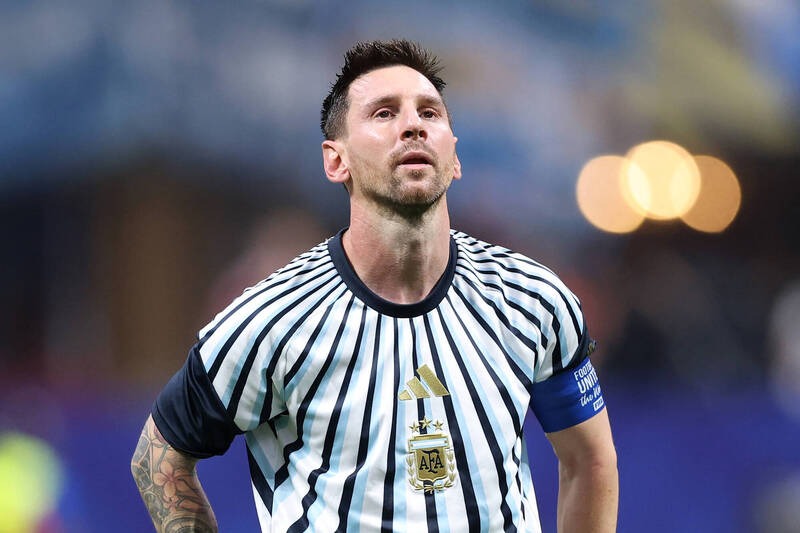
Argentina's journey through the 2026 FIFA World Cup has been anything but ordinary. After surviving two dramatic knockout victories, the defending champions now enter what could be their toughest challenge so far.
Saturday's quarterfinal against Switzerland represents more than just another step toward defending the trophy—it marks the beginning of a far more demanding stretch against European opposition.
If Lionel Scaloni's side hopes to lift the World Cup for a second consecutive tournament, they'll almost certainly have to eliminate three European teams in succession.
Argentina Finally Meet Strong European Opposition
Since defeating France in the 2022 World Cup final in Qatar, Argentina have rarely been tested by Europe's elite.
Their final warm-up before this tournament was a comfortable victory over Iceland, followed by a routine group-stage win against Austria. Those matches offered little indication of the level of competition now awaiting them.
Switzerland may not attract the same attention as England, France, or Spain, but they have built a reputation as one of Europe's most disciplined and difficult teams.
They defend patiently, remain compact without the ball, and punish mistakes through quick counterattacks. They rarely allow opponents to play attractive, free-flowing football.
Lionel Messi knows exactly what that challenge looks like.
He'll remember Argentina's exhausting Round of 16 encounter against Switzerland at the 2014 World Cup in Brazil, when Ángel Di María's extra-time winner finally separated the two sides after nearly two hours of frustration.
Argentina cannot expect another narrow escape.
The Celebration Is Over
Ever since winning the World Cup in Qatar, Argentina have carried the confidence—and perhaps even the comfort—of champions.
Their World Cup qualification campaign, Copa América triumph two years ago, recent friendlies, and even much of this tournament have often felt like an extended celebration of both their historic title and Lionel Messi's legendary career.
That relaxed atmosphere remained visible for long stretches of the knockout match against Cape Verde.
Then everything changed.
Cape Verde exposed vulnerabilities that forced Argentina to fight their way back into the match.
The lesson proved valuable.
Against Egypt in the Round of 16, Argentina arguably produced their best overall performance of the tournament—and still found themselves trailing 2-0.
It was the first time they had fallen behind in a World Cup match since their shocking defeat to Saudi Arabia in Qatar four years earlier.
Once again, Messi inspired another dramatic comeback.
Victories built on resilience certainly strengthen confidence, but relying on late heroics is not a sustainable formula against Europe's strongest teams.
Defensive Problems Continue to Raise Questions
Despite their success, Argentina's biggest concern remains their defense.
The warning signs have existed for years.
During their successful 2022 World Cup campaign, they struggled defensively against Australia, the Netherlands, and France.
Four years later, many of the same issues still exist.
Lionel Scaloni has evaluated several younger defenders since Qatar, but none have fully convinced him that they are ready to replace the established veterans.
One difficult decision concerns Lisandro Martínez.
The Manchester United defender was involved in both goals Argentina conceded against Egypt and could also have defended better during Cape Verde's opener.
His difficulties defending aerial balls may become especially significant against Switzerland, who frequently attack through crosses and set pieces.
Scaloni must now decide whether to continue trusting Martínez or recall experienced defender Nicolás Otamendi for his leadership and physical presence.
Counterattacks Could Be Argentina's Biggest Weakness
Perhaps an even greater concern is how vulnerable Argentina have looked when possession changes hands.
Egypt repeatedly exploited space behind Argentina's midfield and defense, scoring once and coming close on several other occasions.
Only an excellent recovery tackle by Leandro Paredes prevented another dangerous counterattack shortly before Argentina scored the winning goal.
Against Switzerland, those mistakes could prove fatal.
Expect Scaloni to emphasize immediate pressing after losing possession, ensuring that counterattacks are stopped before they have the opportunity to develop.
Improving defensive organization may be just as important as creating chances in attack.
Can Argentina Win If Messi Isn't at His Best?
Before the tournament began, many expected Messi's playing time to be carefully managed.
Initially, that appeared to be the plan.
He was substituted early against Algeria and played only the final thirty minutes versus Jordan.
Since the knockout rounds began, however, circumstances have changed dramatically.
Messi played the full 120 minutes against Cape Verde before carrying Argentina through another emotional battle against Egypt.
At 39 years old, the physical demands continue to increase.
The question now becomes unavoidable:
What happens if Messi finally has an ordinary game?
Fortunately for Argentina, recent history suggests they are capable of coping.
When Messi left injured during the Copa América final two years ago, Argentina arguably improved during the closing stages before securing the championship.
Perhaps even more convincing was their stunning 4-1 victory over Brazil in Buenos Aires last March—a match Messi missed entirely.
Those performances demonstrated that Argentina possess enough collective quality to compete without depending entirely on their captain.
Julián Álvarez Could Be Argentina's X-Factor
One player may prove even more important than many realize.
Julián Álvarez has become one of the foundations of Scaloni's attacking system since establishing himself during the 2022 World Cup.
Unlike a traditional striker, Álvarez constantly presses defenders, tracks back into midfield, links play intelligently, and still provides a consistent scoring threat.
After a demanding season with Atlético Madrid, he entered the tournament carrying an ankle injury and was eased back carefully during Argentina's early matches.
His performance against Egypt offered the strongest indication yet that he is returning to peak condition.
He started the match, connected well with Messi throughout, and delivered his most complete display of the tournament before being substituted late in the game.
Argentina are simply a more balanced team when Álvarez is fully fit.
His relentless movement allows Messi greater freedom while adding the intensity that Argentina need both with and without possession.
The Road Only Gets Harder
Switzerland may be the immediate obstacle, but they are unlikely to be the final one.
Potential meetings with England, France, or another European powerhouse await if Argentina continue their title defense.
Every remaining opponent will punish defensive mistakes more severely than the teams Argentina have already faced.
The defending champions have repeatedly shown courage, resilience, and an unmatched ability to survive under pressure.
But eventually, determination alone will not be enough.
To defend their World Cup crown, Argentina must improve defensively, reduce their dependence on Messi's brilliance, and hope Julián Álvarez reaches his very best form.
Only then will they have everything required to overcome Europe's finest and lift football's biggest prize once again.