
England's World Cup Heartbreak Continues as Argentina Expose Old Problems Again
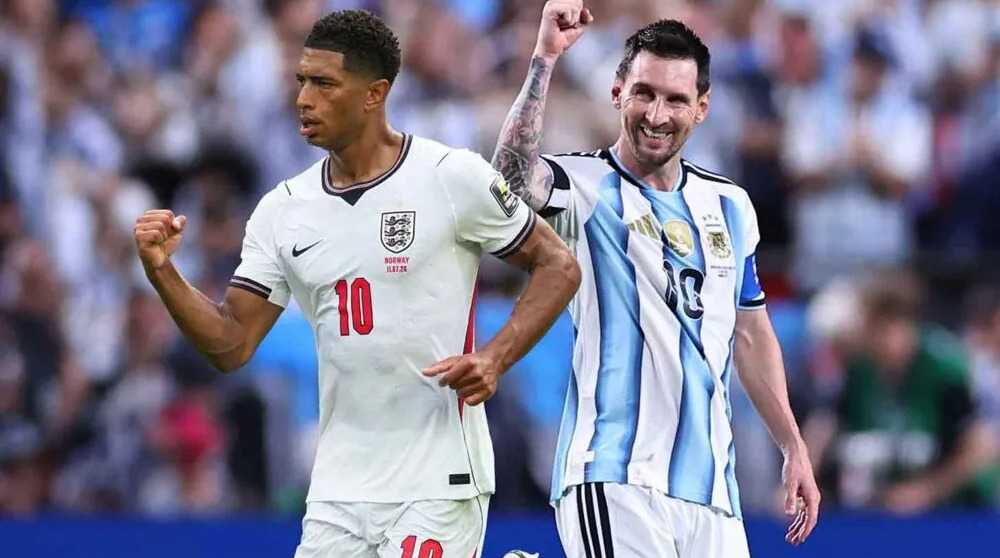
England's latest World Cup campaign ended in painfully familiar fashion.
A place in the final was within touching distance before Argentina produced a dramatic late comeback, turning a 1-0 deficit into a 2-1 victory in the closing minutes of the semifinal.
For England, it was another reminder that while the faces on the touchline and on the pitch may change, the ending often feels exactly the same.
More than six decades after lifting the World Cup in 1966, the wait for another major men's international trophy goes on.
Tuchel Followed a Familiar Path
Thomas Tuchel arrived with a reputation as one of Europe's elite coaches.
Throughout much of the tournament, he justified that billing.
His tactical adjustments helped England recover against Croatia in the group stage, survive a difficult Round of 32 tie, and defend resiliently against both Mexico and Norway in the knockout rounds.
But against Argentina, his approach ultimately backfired.
After Anthony Gordon gave England the lead early in the second half, Tuchel increasingly prioritized protecting the advantage rather than extending it.
Defensive substitutions gradually invited Argentina forward.
As England retreated deeper, the defending champions gained confidence, possession, and momentum.
Once Lionel Messi found more space between the lines, the match slowly shifted away from England.
By the final whistle, another promising tournament had ended in disappointment.
A Familiar Story on the Biggest Stage
England have repeatedly shown they can compete deep into major tournaments.
The problem has been finishing the job.
The pattern has become painfully recognizable.
In the 2018 World Cup semifinal, England led Croatia before losing in extra time.
At Euro 2020, they took an early lead against Italy before eventually falling on penalties.
Now, against Argentina, another lead slipped away.
The similarities are difficult to ignore.
Against lower-ranked opponents, England often manage difficult situations effectively.
Against football's elite, however, protecting narrow leads has repeatedly proved far more complicated.
Argentina Punished England's Caution
For more than an hour, England frustrated Argentina.
Their defensive organization limited clear chances while Jude Bellingham, Anthony Gordon, and Djed Spence caused problems whenever England attacked in transition.
After taking the lead, though, England stopped asking questions of Argentina's defense.
Instead of continuing to press, they gradually retreated.
That was exactly the kind of match Lionel Messi wanted.
Given more time on the ball, Argentina's captain began dictating the tempo, creating the equalizer for Enzo Fernández before delivering the cross that Lautaro Martínez converted for the winning goal.
Rather than protecting their advantage, England unintentionally surrendered control.
The Same Midfield Problem Persists
England's struggles against elite opponents are not new.
Across multiple tournaments, world-class midfielders have repeatedly taken command against them.
Luka Modrić did it for Croatia.
Andrea Pirlo dictated games for Italy.
Jorginho and Marco Verratti controlled the Euro 2020 final.
Spain's Martín Zubimendi dominated midfield during Euro 2024.
Against Argentina, Enzo Fernández and Alexis Mac Allister gradually established the same authority.
As England dropped deeper, Argentina found increasing freedom to circulate possession and push their opponents back.
That control eventually became overwhelming.
Fatigue May Have Played a Role
England's demanding route through the tournament cannot be ignored.
They endured physically draining matches against Mexico and Norway before arriving in Atlanta.
Several players had also completed long club seasons that included Premier League campaigns and European competitions.
Tuchel acknowledged after the match that his players looked exhausted.
That fatigue may help explain why England struggled to maintain intensity during the closing stages.
Yet it does not fully explain the tactical choices.
By switching to a back five and removing much of the team's counterattacking threat, England effectively isolated Harry Kane and surrendered possession almost entirely.
Between Gordon's goal and Lautaro Martínez's stoppage-time winner, England controlled only a tiny share of the ball.
Against a team as talented as Argentina, that approach proved unsustainable.
Argentina Never Stopped Believing
While England became increasingly cautious, Argentina continued playing with confidence.
After the match, coach Lionel Scaloni explained his team's mentality.
His players, he said, attacked the game with the freedom of children, focused entirely on playing rather than worrying about the consequences of failure.
That fearless approach became increasingly evident as the match wore on.
Even after falling behind, Argentina never abandoned their attacking principles.
Instead, they trusted their quality and continued creating chances until the breakthrough finally arrived.
Tuchel's Biggest Challenge Is Mental, Not Tactical
After the defeat, Tuchel rejected suggestions that England are cursed.
Instead, he argued the team simply became too passive.
England stopped winning duels.
They failed to press effectively.
They struggled to keep possession and lost control of the game.
Those are footballing issues rather than historical ones.
Still, history inevitably hangs over every England campaign.
Ironically, before becoming national team manager, Tuchel had accurately identified one of England's biggest weaknesses.
He previously suggested that England often appeared more afraid of losing than excited about winning.
Against Argentina, that observation seemed strikingly accurate once again.
Looking Ahead to Euro 2028
England remain one of the world's strongest national teams.
The squad is talented, experienced, and filled with players competing at Europe's biggest clubs.
Yet talent alone has never been enough to win major tournaments.
Breaking through requires more than tactical preparation.
It requires the confidence to keep attacking when the pressure is greatest.
With Euro 2028 approaching on home soil, Tuchel now faces the biggest challenge of his England tenure.
Changing tactics is relatively straightforward.
Changing decades of tournament psychology may prove far more difficult.