
Japan vs Brazil: A 20-Year World Cup Rivalry Revisited
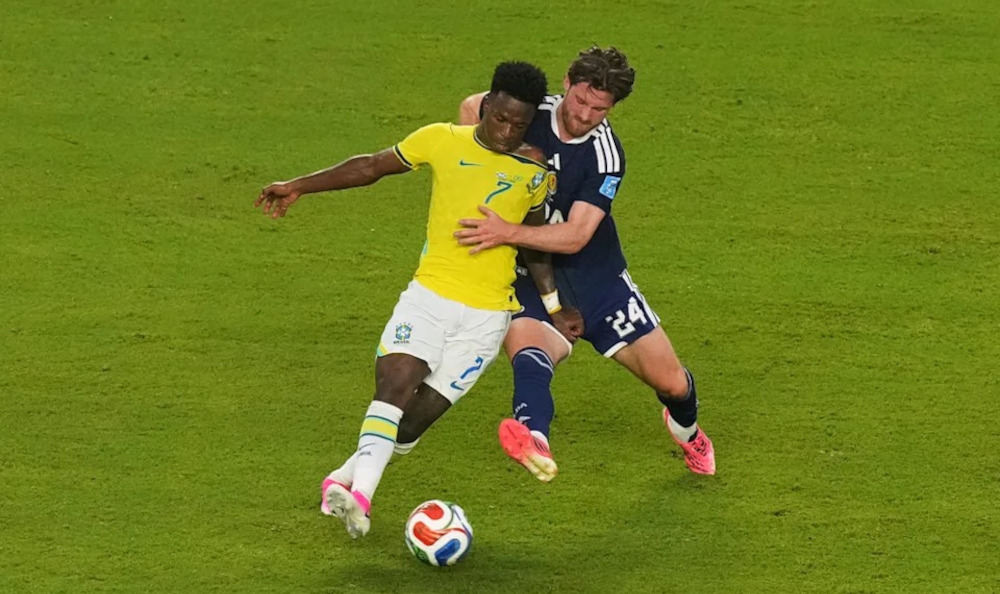
When Japan face Brazil, it’s never just another fixture. The two nations have met on football’s biggest stage before, and their history stretches back more than two decades.
The first World Cup meeting between Japan and Brazil came in 2006, when Germany hosted the tournament. At that time, the gap between the two sides was clear—and reflected both in experience and pedigree.
Japan were still finding their footing on the global stage. It was only their third World Cup appearance, following a debut in 1998 and a co-hosted tournament in 2002. Brazil, on the other hand, arrived in Germany as reigning champions, having lifted a record fifth World Cup title in 2002.
Unsurprisingly, Brazil dominated that encounter, securing a comfortable 4–1 victory.
Their lineup was stacked with legends. Ronaldo, Ronaldinho, and Kaká all featured, representing one of the most fearsome attacking units in international football history. Japan also had talented players such as Hidetoshi Nakata, Junichi Inamoto, and Shunsuke Nakamura, but the overall depth and star power were on very different levels.
At the time, Brazil’s squad was filled with players from Europe’s elite clubs—Real Madrid, AC Milan, Barcelona, Bayern Munich, Juventus, Inter Milan, and Arsenal among them. Japan, by contrast, had only a small number of Europe-based players, with most of their squad competing domestically in the J.League.
Fast forward twenty years, and the landscape has changed dramatically.
Brazil remain the most successful nation in World Cup history, though they are still searching for a sixth title. Japan, meanwhile, are no longer outsiders hoping to close the gap—they are now a team built around players who are consistently performing in Europe’s top leagues.
Today’s Samurai Blue squad features a strong European core. Only a handful of players still come from Japan’s domestic league, including veteran defender Yūto Nagatomo, who previously spent seven seasons at Inter Milan, along with backup goalkeepers Keisuke Ōsako and Tomoki Hayakawa.
Even with key injuries to players like Kaoru Mitoma, Wataru Endo, and Takumi Minamino, Japan’s squad still includes representation from the Premier League, La Liga, Serie A, Bundesliga, and Ligue 1. Beyond that, several players are thriving in other competitive leagues, including Ayase Ueda, who impressed in the Eredivisie with Feyenoord after finishing a 25-goal season as the league’s top scorer.
Brazil, meanwhile, remain a formidable opponent, even if they are not quite the dominant force they once were. Neymar continues to feature at 34, Vinícius Júnior has emerged as the team’s leading star, Gabriel Magalhães has established himself as one of the world’s top defenders, and Raphinha remains a key attacking threat despite injury setbacks.
What makes this matchup even more intriguing is Japan’s growing confidence. This is not a team simply happy to compete—they genuinely believe they can challenge the very best. Japan Football Association president Tsuneyasu Miyamoto even stated that the squad has full belief in their ability to compete with Brazil.
That confidence is not unfounded. Just last October, Japan recorded their first-ever win over Brazil in a friendly match. Despite trailing 2–0 at halftime against a near full-strength Brazilian side, they staged an impressive comeback to win 3–2.
Of course, a friendly result does not define a rivalry. But it does reflect how far Japan have come since their last World Cup meeting with Brazil on June 22, 2006, in Dortmund.
Now, twenty years and a week later, Japan arrive in Houston with a very different identity—and a belief that the gap between them and football’s traditional giants is no longer what it once was.