
Lionel Messi Keeps Saving Argentina, But Can They Win Without Him?
Where would Argentina be without Lionel Messi?
The answer might be painfully simple: probably on a flight back to Buenos Aires, while the FIFA World Cup trophy would be heading elsewhere, preparing to find a new owner when the final is played on July 19.
But thanks to the greatest footballer of his generation — and arguably the greatest player the sport has ever seen — Argentina are still holding onto their dream.
The debate over football’s greatest of all time will never truly end. Supporters of Pelé, Diego Maradona, Cristiano Ronaldo, and Messi will always have their arguments. But this World Cup has provided perhaps the strongest evidence yet that Messi belongs in a category of his own.
Still not convinced? Ask Egypt. Ask Cape Verde. Both teams pushed Argentina to the absolute limit, only to discover that when the biggest moments arrive, Messi remains the player who can change everything.
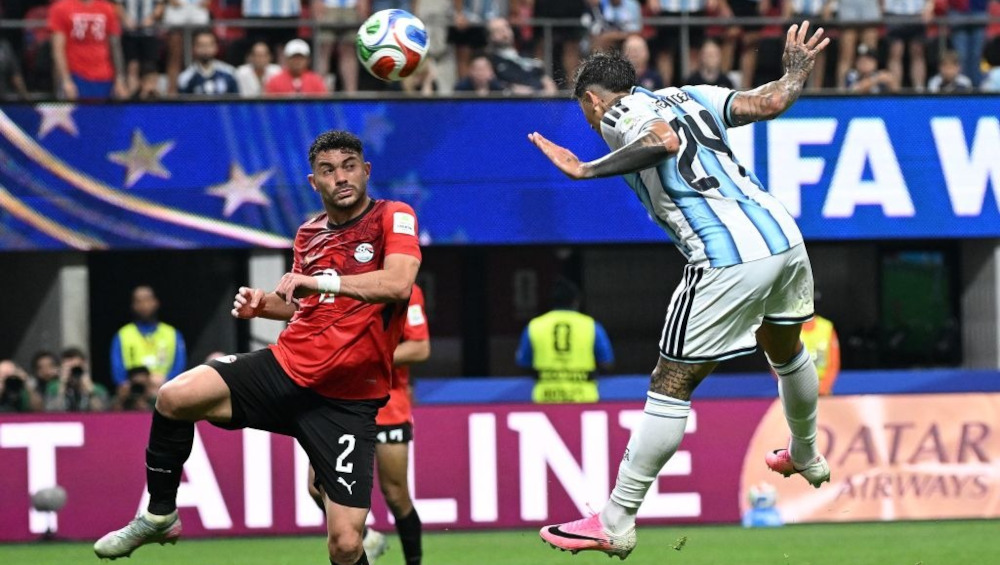
Egypt looked like they were about to create one of the biggest shocks in World Cup history. Inspired by Mohamed Salah, Hossam Hassan’s side held a 2-0 lead with just over 10 minutes remaining and appeared close to eliminating the defending champions.
Then Messi took over.
The 39-year-old had missed a first-half penalty and had been relatively quiet for much of the match. But when Argentina needed a miracle, he produced one. Messi created the opportunity for Cristian Romero to score before finding the equalizer himself just five minutes later — his eighth goal of the tournament.
Once again, he arrived exactly when Argentina needed him most.
The Inter Miami forward has now scored in nine consecutive World Cup matches, setting a new record. With 21 World Cup goals, he has also extended his lead as the tournament’s all-time top scorer, moving two goals ahead of France star Kylian Mbappé.
But while Messi’s brilliance is undeniable, a bigger question remains: how strong is Argentina as a team?
Are they too dependent on Messi? Have they benefited from a favorable path to the quarterfinals? And if Messi finally has a quiet game against one of football’s elite nations, who will step up and carry Argentina forward?
Interestingly, those questions are almost identical to the ones being asked about Portugal and Cristiano Ronaldo, Messi’s longtime rival for individual and club honors.
Portugal may have gone further in the tournament if Ronaldo had been available. Argentina, meanwhile, have relied heavily on Messi’s incredible production, with his eight goals proving decisive throughout their campaign.
However, Argentina’s journey to this stage has undoubtedly been helped by a relatively comfortable schedule.
Their opponents so far have not included many of football’s traditional powerhouses. Austria, ranked No. 23 in the FIFA rankings, is the highest-ranked team Argentina have faced across five matches. Their other opponents included Algeria (No. 29), Egypt (No. 24), Cape Verde (No. 65), and Jordan (No. 73).
Their quarterfinal opponent Switzerland, ranked No. 15, will provide a tougher challenge, but they are still not considered a top-10 team.
That means Argentina may not face a true elite opponent until the semifinal or final. Potential matchups against England, France, Spain, Morocco, or Belgium would finally reveal whether Messi and Argentina are capable of defeating the very best teams in the world.
The draw has been kind to them, but eventually, every champion must prove themselves against the strongest competition.
There is no question about Messi’s ability to decide matches. However, his recent career has also shown that even the greatest players are affected by age.
During his two seasons at Paris Saint-Germain, Messi occasionally struggled against the very best Champions League opponents, with elite defenses able to limit his influence. That is why Argentina need to prove they have a Plan B.
They cannot expect Messi to rescue them every single time.
Defensively, there are reasons for concern. Argentina have conceded five goals in just three matches against Jordan, Cape Verde, and Egypt. Against stronger opponents, those mistakes could become much more costly.
They also need more from their attacking options.
Lautaro Martínez has been one of Serie A’s most reliable goal scorers with Inter Milan, but his international form has been inconsistent. He has scored only two goals in seven appearances for Argentina this year, with both coming against Honduras and Jordan.
Julián Álvarez, another key attacking option who could command a transfer fee exceeding £100 million this summer, has also struggled for goals. The former Manchester City striker has scored only once in his last 12 matches and has managed just one goal in seven games for Argentina in 2026.
That leaves Argentina relying heavily on Messi’s magic.
Maybe that is enough.
Messi continues to prove that he is unlike any other player in football history. His vision, creativity, and ability to produce impossible moments remain unmatched.
But eventually, even Messi will run out of miracles.
The question facing Argentina is not whether Messi can save them — he already has done that many times.
The real question is whether they have enough around him when the moment comes that he cannot.