
Exploring the Relationship Between World Cup Champions and the Ballon d'Or: A Historical Data Analysis
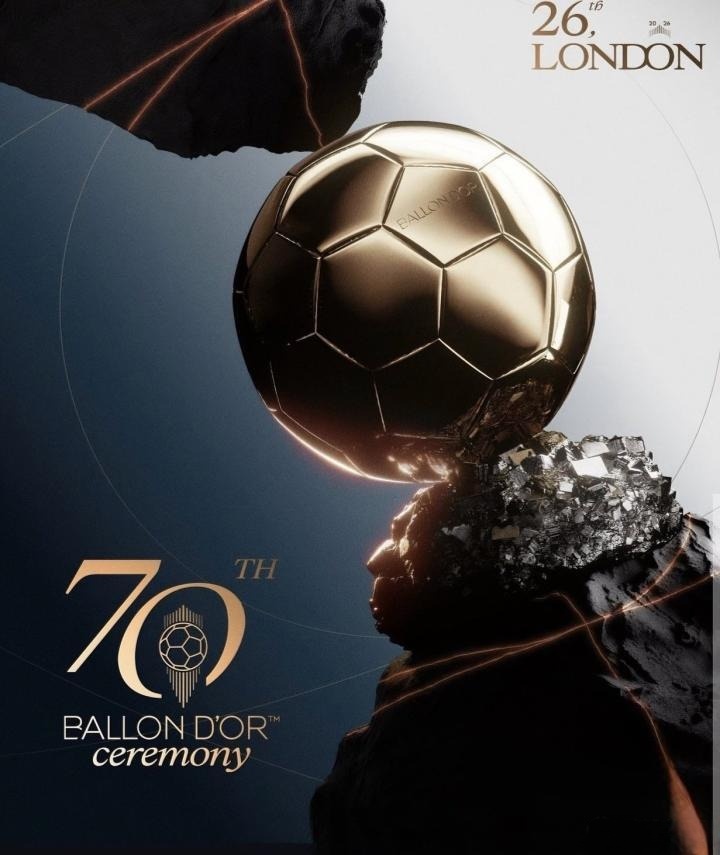
Does winning the World Cup make a player a prime candidate for the Ballon d'Or? The Ballon d'Or committee has analyzed data dating back to 1956 to interpret how World Cup success influences the race for football's most prestigious individual award. As we approach the conclusion of the 2026 World Cup, discussions around who will claim the Ballon d'Or are once again taking center stage in the football community.
Our research offers a clear answer: winning the World Cup indeed enhances the chances of winning the Ballon d'Or, but it doesn’t automatically make a player a frontrunner for the award.
The Data Reveals the Truth
Since the inception of the Ballon d'Or in 1956, there have been 17 World Cups held. Only on 7 occasions has the World Cup winner also captured the Ballon d'Or in the same year, which accounts for 41.2%. It is noteworthy that prior to 1995, the award was only open to European players, thus excluding legends like Pelé and Diego Maradona from the honor. From 1995 onwards, as the Ballon d'Or was opened to global players, the success rate improved significantly; in the last 7 World Cups, 4 championship players lifted the Ballon d'Or, resulting in a 57.1% success rate.
The Glory of the Seven Dual Champions
In the annals of football, only seven players have won both the World Cup and the Ballon d'Or in the same season:
- Bobby Charlton (England) — 1966 World Cup
- Paolo Rossi (Italy) — 1982 World Cup
- Lothar Matthäus (Germany) — 1990 World Cup
- Zinedine Zidane (France) — 1998 World Cup
- Ronaldo (Brazil) — 2002 World Cup
- Fabio Cannavaro (Italy) — 2006 World Cup
- Lionel Messi (Argentina) — 2022 World Cup
The Trend of Entering the Ballon d'Or Top Three
While winning the World Cup does not guarantee a Ballon d'Or victory, our analysis of recent years reveals a striking trend: since 1995, at least one player from that year's World Cup champion has always finished in the top three for the Ballon d'Or. Among the last seven World Cups, 10 of the 21 Ballon d'Or placements have been filled by World Cup champions, yielding a nearly 48% representation.
Here are some examples of the top three Ballon d'Or contenders from various years:
-
1998 Ballon d'Or:
- Zinedine Zidane (1998 World Cup Champion)
- Davor Šuker
- Ronaldo
-
2002 Ballon d'Or:
- Ronaldo (2002 World Cup Champion)
- Roberto Carlos (2002 World Cup Champion)
- Oliver Kahn
-
2006 Ballon d'Or:
- Fabio Cannavaro (2006 World Cup Champion)
- Gianluigi Buffon (2006 World Cup Champion)
- Thierry Henry
-
2010 Ballon d'Or:
- Lionel Messi
- Andrés Iniesta (2010 World Cup Champion)
- Xavi (2010 World Cup Champion)
-
2014 Ballon d'Or:
- Cristiano Ronaldo
- Lionel Messi
- Manuel Neuer (2014 World Cup Champion)
-
2018 Ballon d'Or:
- Luka Modrić
- Cristiano Ronaldo
- Antoine Griezmann (2018 World Cup Champion)
-
2023 Ballon d'Or:
- Lionel Messi (2022 World Cup Champion)
- Erling Haaland
- Kylian Mbappé
Conclusion
Clearly, the World Cup holds immense significance as the pinnacle of football competitions. However, the Ballon d'Or focuses more on overall season performance rather than short-term displays of excellence. Historical data demonstrates that in almost half of the instances, winning the World Cup does not automatically translate into being a leading candidate for the Ballon d'Or. Nevertheless, exceptional performance coupled with World Cup success undeniably boosts a player's prospects in the Ballon d'Or race.
As we approach the 2026 Ballon d'Or ceremony, who will ultimately take home the trophy, and who will grace the podium? All will be revealed on October 26 in London!